Stamped and Stained Concrete in West Texas: Premium Decorative Surfaces
In West Texas landscapes where durability meets aesthetic aspiration, stamped and stained concrete represents sophisticated solution combining artistic expression with exceptional performance. This comprehensive guide explores decorative concrete techniques transforming ordinary surfaces into extraordinary features, offering homeowners and businesses premium alternatives to traditional materials while addressing regional climate challenges through innovative design and professional implementation.
Stamped Concrete Patio Contractors Serving Monahans TX, Odessa TX & Midland TX
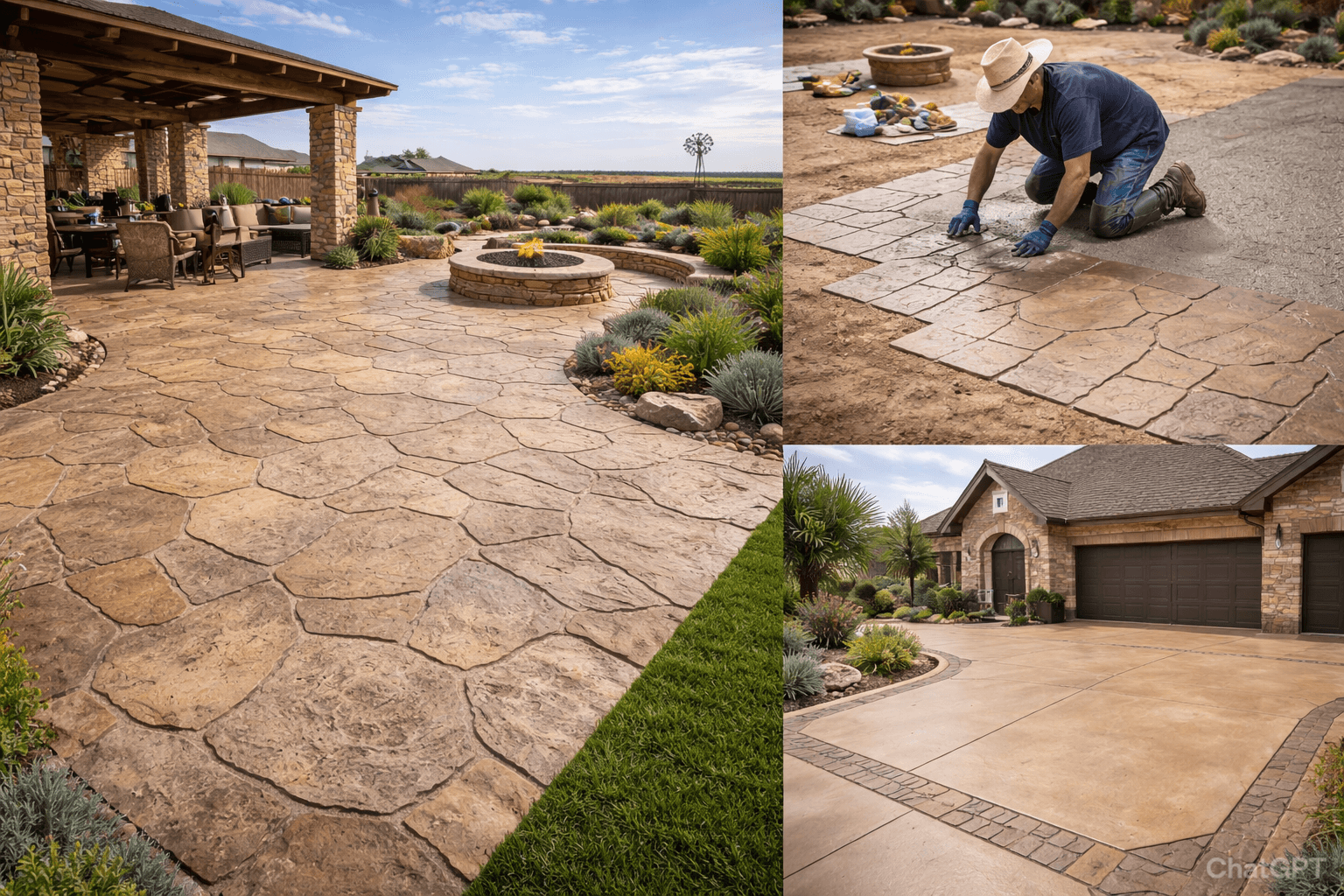
Buried Stone Rock Yard provides professional stamped concrete patio installation across West Texas including Monahans TX, Odessa TX & Midland TX. We handle full-service patio projects from site preparation and formwork through concrete placement, colour application, pattern stamping, and UV-resistant sealing. For Monahans TX homeowners, we use concrete mix designs and expansion joint spacing suited to the extreme temperature cycles of the Permian Basin — preventing cracking and ensuring your stamped concrete patio remains intact and attractive through years of West Texas weather. We pair this with artificial grass installation and decorative rock borders as part of a complete custom landscape design. Get a free concrete quote.
Evolution of Decorative Concrete Technology
Stamped and stained concrete technology has advanced significantly from early imprinting methods to contemporary systems offering remarkable realism and durability. Modern techniques allow creation of surfaces mimicking natural stone, brick, tile, wood, and other materials with convincing detail while providing concrete's inherent strength and longevity. This evolution positions decorative concrete as premium choice for West Texas properties seeking beauty without compromising performance.
Material innovations have expanded design possibilities while improving weather resistance crucial in our region. Advanced integral color systems provide consistent hue throughout concrete depth, preventing wear patterns from affecting appearance. High-performance sealers offer protection against ultraviolet degradation, chemical exposure, and moisture penetration—all important considerations in West Texas conditions.
Application techniques have refined to ensure precise pattern transfer and consistent coloring. Professional installers utilize specialized tools and materials creating seamless transitions between stamped areas and other surfaces. This attention to detail distinguishes premium installations from basic applications, ensuring decorative concrete enhances rather than detracts from overall property aesthetic.
Design Possibilities and Aesthetic Options
Stamped concrete offers extensive design flexibility through combination of patterns, colors, and finishing techniques. Pattern selections range from natural stone simulations like slate, flagstone, and cobblestone to geometric designs, custom logos, or artistic motifs. In West Texas, popular choices often include patterns complementing regional architecture while providing visual interest appropriate to scale of spaces.
Color integration represents powerful design tool, with options including integral colors mixed throughout concrete, surface-applied color hardeners, and combination approaches creating depth and variation. West Texas properties often benefit from earth tone palettes harmonizing with natural surroundings while withstanding intense sunlight without fading concerns when properly sealed.
Staining techniques add another dimension to decorative concrete, with acid stains creating unique, marbled effects through chemical reaction with concrete surface. Water-based stains offer broader color ranges and easier application control. Both approaches create one-of-a-kind appearances impossible to duplicate exactly, adding distinctive character to installations.
Combination treatments, where stamping and staining work together, produce particularly striking results. Stained and stamped concrete can replicate aged stone, weathered wood, or antique tile with remarkable authenticity. These techniques allow creation of surfaces appearing to have developed patina over time while offering new construction durability.
Climate Considerations for West Texas Installations
Successful stamped and stained concrete in West Texas requires specific attention to regional climate factors influencing both installation process and long-term performance. Temperature management during placement and curing represents critical consideration, with professionals adjusting mix designs, placement timing, and curing methods to accommodate seasonal variations.
Sun exposure affects color perception and material performance. South-facing areas experience most intense sunlight, potentially influencing color selection and sealer specifications. Properly formulated sealers with UV protection maintain appearance while preventing degradation from solar radiation.
Thermal expansion and contraction present challenges in region experiencing significant temperature swings. Control joints must be strategically placed and properly detailed to manage movement without compromising aesthetic integrity. Expansion materials and joint fillers selected for West Texas conditions prevent unsightly cracking or joint failure.
Wind during installation can accelerate surface drying, affecting stamping quality and color consistency. Professional installers employ windbreaks and timing strategies ensuring optimal conditions for pattern transfer and finishing.
Occasional intense rainfall requires attention to drainage integration. Decorative concrete surfaces should slope appropriately while maintaining visual appeal. Permeable concrete options offer additional drainage benefits where local regulations or site conditions warrant.
Professional Installation Advantages
Stamped and stained concrete installation benefits significantly from professional expertise, particularly valuable in West Texas conditions. Site preparation involves thorough evaluation of substrate conditions, drainage requirements, and integration with existing structures. Proper base construction prevents settling and ensures long-term stability.
Concrete placement requires precise timing and technique coordination. Professionals manage mix design, placement sequence, and finishing operations ensuring consistent quality throughout installation. This coordination becomes especially important for larger areas or complex patterns.
Stamping execution demands skill developed through experience. Proper timing, pressure application, and tool selection influence pattern clarity and depth consistency. Professionals understand how concrete characteristics at different stages affect stamping results.
Staining application involves artistic sensibility combined with technical knowledge. Professionals achieve desired effects through controlled application, reaction management, and neutralization processes. Their experience prevents common issues like blotchiness or uneven coloration.
Sealing represents final critical step protecting investment. Professional sealers appropriate for West Texas conditions provide protection against stains, UV degradation, and moisture penetration while enhancing color depth. Proper application ensures even coverage and adequate thickness.
Maintenance and Longevity Considerations
Properly installed and maintained stamped and stained concrete offers exceptional durability with reasonable care requirements. Regular cleaning involves sweeping to remove abrasive debris and occasional washing with appropriate cleaners. Avoid harsh chemicals or abrasive methods that could damage sealer or surface.
Resealing represents most important maintenance activity, typically required every 2-3 years depending on traffic levels and exposure. Professional resealing restores protective qualities and appearance enhancement provided by original sealer. In West Texas, UV-resistant sealers particularly important for maintaining color vibrancy.
Stain prevention involves prompt attention to spills, especially oil-based substances. While sealers provide protection, immediate cleaning prevents potential penetration. Food, beverage, and chemical spills should be addressed quickly using appropriate cleaning methods.
Crack management requires professional assessment. While decorative concrete includes control joints managing expected movement, unexpected cracking may occur. Professionals can evaluate causes and recommend appropriate repairs maintaining aesthetic integrity.
Winter considerations, though less extreme in West Texas than some regions, involve avoiding deicing chemicals that can damage concrete surfaces. Sand provides traction without chemical risks during occasional freezing conditions.
The Buried Stone Rock Yard Approach
Our approach to stamped and stained concrete combines artistic vision with technical expertise grounded in West Texas experience. Design consultation explores client preferences, functional requirements, and site characteristics guiding pattern and color selections.
Material selection draws on knowledge of products performing best in our climate. We understand which concrete mixes, color systems, and sealers provide optimal results given West Texas conditions and intended use patterns.
Professional installation reflects commitment to craftsmanship. Our team includes experienced concrete artisans understanding nuances of stamping, staining, and finishing techniques. Attention to detail ensures patterns align properly, colors remain consistent, and transitions appear seamless.
Quality control throughout process ensures installations meet our standards for both appearance and performance. We verify substrate preparation, monitor concrete placement, inspect stamping execution, and confirm proper sealing.
Ongoing support includes maintenance guidance and resealing services. We help clients protect their investment while enjoying decorative concrete benefits for years.
Applications and Usage Scenarios
Stamped and stained concrete serves diverse applications across West Texas properties, offering premium surfaces for various settings. Patios and outdoor living areas benefit from decorative concrete's durability and design flexibility, creating attractive spaces for entertainment and relaxation.
Pathways and walkways utilize stamped patterns guiding movement while enhancing landscape aesthetic. Natural stone patterns create meandering pathways feeling organic within garden settings.
Pool decks represent ideal application where slip resistance, heat reflection, and aesthetic appeal all matter. Decorative concrete provides cooler surface than some alternatives while offering design integration with pool surroundings.
Driveways and entry courts make strong first impressions with decorative concrete. Durable surfaces withstand vehicle traffic while creating welcoming arrival experiences.
Commercial applications include plaza areas, restaurant patios, and retail walkways where decorative concrete enhances brand image while providing practical performance.
Economic and Aesthetic Benefits
Investing in stamped and stained concrete delivers multiple advantages beyond visual enhancement. Cost comparison often favorable relative to natural materials requiring similar appearance, with decorative concrete offering installed cost savings while providing superior durability in many cases.
Property value enhancement results from premium outdoor surfaces appealing to buyers. Well-executed decorative concrete installations demonstrate property care and quality expectations.
Low maintenance requirements compared to some alternatives provide ongoing time and cost savings. Properly sealed surfaces resist stains and weather effects with minimal care.
Design flexibility allows creation of unique environments reflecting individual style. Unlike manufactured pavers or tiles with limited patterns, decorative concrete offers virtually unlimited design possibilities.
Environmental considerations include potential for permeable options managing stormwater, reduced material transportation compared to imported stone, and longevity reducing replacement frequency.
Transforming West Texas Properties
Stamped and stained concrete represents opportunity to enhance outdoor environments with surfaces combining beauty, durability, and practicality. These installations transform functional areas into design features, extend living spaces, and create cohesive landscape experiences.
We help property owners explore decorative concrete possibilities for West Texas settings. Our team brings design creativity, technical expertise, and commitment to quality ensuring installations exceed expectations. Contact us beginning conversation about transforming your property with stamped and stained concrete celebrating West Texas lifestyle.
