
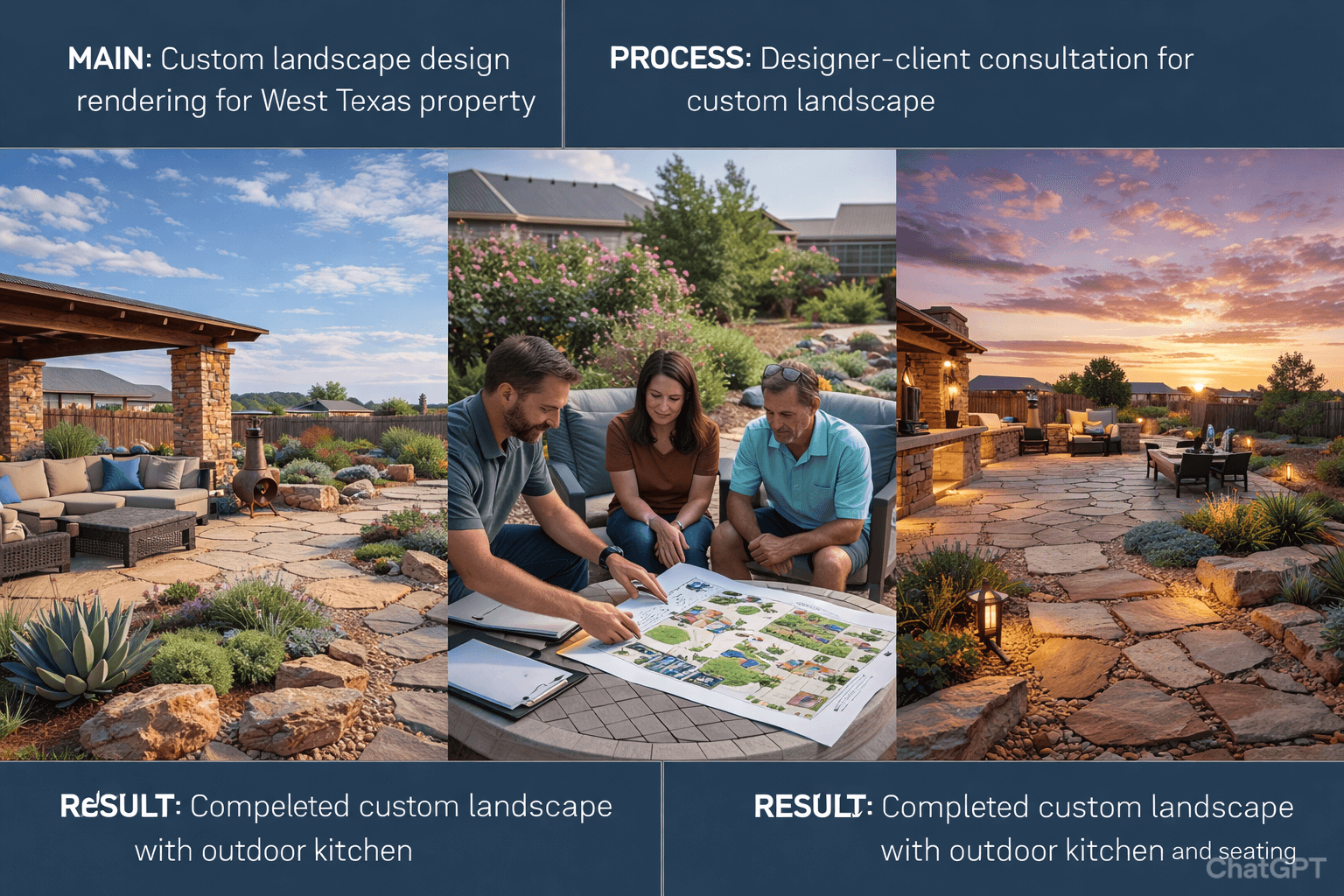
Custom Landscape Design in West Texas: Creating Personalized Outdoor Environments
In West Texas where outdoor living represents essential aspect of regional lifestyle, custom landscape design transforms ordinary properties into personalized environments reflecting individual preferences while harmonizing with distinctive regional character. This comprehensive guide explores professional approach to creating outdoor spaces that balance aesthetic vision with practical functionality, addressing West Texas's unique environmental conditions while delivering exceptional value through thoughtful design and expert implementation.
Landscape Design and Build in Odessa TX — From First Consultation to Final Installation
Buried Stone Rock Yard provides complete landscape design and build services in Odessa TX. Unlike design-only firms who hand off to a separate contractor, we manage your project from initial design consultation through full installation. Our landscape design and build process begins with a detailed site survey covering sun exposure, drainage, soil composition, and existing features. We then develop a 3D design concept incorporating your vision, your budget, and the specific demands of the West Texas climate. Explore our artificial turf options, decorative rock and materials, and stamped concrete patios, or contact us for a design consultation.
The Philosophy of Personalized Landscape Design
Custom landscape design begins with fundamental philosophy that successful outdoor spaces emerge from collaborative process understanding client aspirations, property characteristics, and environmental context. In West Texas, this philosophy acknowledges relationship between built environments and natural landscape, creating designs feeling inherently appropriate to region while expressing individual personality.
Personalization extends beyond aesthetic preferences to encompass functional requirements, lifestyle patterns, and long-term property goals. Design process considers how spaces will evolve over time, accommodating changing needs while maintaining design integrity. This forward-thinking approach distinguishes custom design from standardized solutions, ensuring installations provide enduring value beyond initial visual impact.
Regional adaptation represents crucial component of design philosophy. West Texas conditions—intense sunlight, temperature extremes, occasional intense rainfall, and distinctive soil characteristics—influence every design decision. Successful designs work with these conditions rather than against them, creating environments that thrive within regional context while minimizing maintenance requirements and resource consumption.
Collaborative Design Process: From Vision to Reality
Professional custom design follows structured yet flexible process ensuring client vision translates effectively into built environment. Initial consultation establishes foundation, exploring client preferences, property characteristics, budget considerations, and functional requirements. This discovery phase identifies opportunities and constraints guiding subsequent design development.
Site analysis represents critical step where designers document existing conditions influencing design decisions. This includes evaluating sun patterns throughout day and seasons, drainage characteristics, soil composition, existing vegetation, architectural features, and views. In West Texas, particular attention focuses on water management considerations and microclimate creation opportunities.
Concept development transforms gathered information into preliminary design ideas. Designers explore various approaches addressing identified requirements while considering aesthetic possibilities. This phase typically involves sketches, mood boards, or digital representations helping clients visualize potential directions before committing to detailed design.
Design refinement evolves selected concept into comprehensive plan. This includes detailed layout specifying material selections, planting plans, lighting design, irrigation systems, and construction details. Designers consider sequencing of implementation, budget allocation across elements, and phasing options for larger projects.
Implementation planning bridges design and construction phases. Detailed specifications ensure contractors understand design intent, material requirements, and quality standards. Designers often remain involved during implementation, providing clarification and addressing unforeseen conditions while maintaining design integrity.
Design Elements for West Texas Environments
Successful custom designs incorporate elements specifically suited to regional conditions while creating cohesive aesthetic experience. Material selection represents primary consideration, with choices balancing appearance, durability, maintenance requirements, and environmental performance.
Hardscape elements provide structure and define spaces. Natural stone offers excellent choice for West Texas, with varieties like limestone and sandstone providing regional authenticity while withstanding temperature fluctuations. Proper installation ensures stability and drainage, crucial considerations in our climate.
Plant selection focuses on species thriving in West Texas conditions while contributing to design aesthetic. Native and adapted plants offer advantages including reduced water requirements, resistance to local pests, and natural integration with surrounding landscape. Designers consider seasonal interest, growth patterns, and maintenance requirements when developing planting plans.
Water features, when included, serve both aesthetic and functional purposes. In water-conscious West Texas, designs often incorporate recirculating systems or features emphasizing water's visual and auditory qualities without significant consumption. Proper design prevents evaporation and maintenance issues.
Lighting extends usability of outdoor spaces while enhancing safety and aesthetic appeal. Energy-efficient LED systems provide illumination for pathways, architectural features, and gathering areas. Design considers light pollution reduction and integration with overall electrical planning.
Furniture and accessory selections complete outdoor environments, providing comfort and functionality. Materials resistant to sun exposure and temperature extremes ensure longevity, while arrangements support intended uses of spaces.
Climate Considerations in West Texas Design
Custom landscape design in West Texas requires particular attention to regional climate characteristics influencing both immediate experience and long-term performance. Sun exposure analysis informs placement of various elements, with designs creating shaded areas for comfort during hottest parts of day while maximizing solar gain during cooler seasons.
Wind patterns influence design decisions regarding windbreak creation, outdoor living space orientation, and plant selection. Properly designed windbreaks reduce cooling costs while creating more comfortable microclimates for outdoor enjoyment.
Water management represents critical consideration in our region. Designs incorporate strategies for managing rainfall during intense events while minimizing irrigation requirements during dry periods. This includes proper grading, permeable surfaces, rainwater harvesting where appropriate, and efficient irrigation systems.
Temperature extremes influence material selections and construction methods. Designs account for expansion and contraction, sun exposure effects on colors and materials, and creation of microclimates moderating temperature variations.
Seasonal changes guide design decisions regarding year-round interest and functionality. While West Texas experiences less dramatic seasonal variation than some regions, designs consider how spaces function during different times of year and how maintenance requirements fluctuate.
Professional Implementation Advantages
Custom design realization benefits significantly from professional implementation ensuring design intent translates accurately into built environment. Site preparation represents first critical phase, with professionals addressing soil conditions, drainage requirements, and existing features needing modification.
Material handling and installation require expertise particularly valuable for custom projects. Natural stone placement, specialized planting techniques, and intricate hardscape details demand skills developed through experience with similar projects in West Texas conditions.
Coordination among various trades ensures seamless integration of different elements. Professional implementers manage scheduling, quality control, and problem-solving during construction phase, maintaining design integrity while addressing practical challenges.
Attention to detail distinguishes professional implementation, with finishes, transitions, and final adjustments significantly influencing overall quality. These details often represent difference between adequate result and exceptional outcome.
The Buried Stone Rock Yard Approach
Our approach to custom landscape design combines creative vision with technical expertise grounded in West Texas experience. Process begins with deep listening understanding client aspirations, lifestyle patterns, and property characteristics.
Design development incorporates regional knowledge ensuring solutions work effectively within West Texas context. We understand which materials perform best in our conditions, which planting strategies succeed, and which design approaches deliver lasting value.
Implementation reflects commitment to craftsmanship and attention to detail. Our team includes designers and installers working collaboratively, ensuring design vision translates accurately into built environment. Partnership with Manny's Backhoe Services provides equipment capabilities for projects of any scale.
Ongoing relationship extends beyond project completion, with maintenance guidance and support ensuring designed environments continue thriving and evolving as intended.
Economic and Lifestyle Benefits
Investing in custom landscape design delivers multiple benefits extending beyond property enhancement. Increased property value represents significant economic return, with well-designed outdoor spaces often providing excellent return on investment while making properties stand out in market.
Enhanced outdoor living improves quality of life, providing spaces for relaxation, entertainment, and connection with nature. In West Texas where indoor-outdoor living represents important aspect of lifestyle, well-designed spaces significantly enhance daily experience.
Reduced maintenance results from thoughtful design considering long-term care requirements. Proper plant selection, appropriate material choices, and efficient systems minimize ongoing maintenance while maximizing enjoyment.
Environmental benefits include reduced water consumption through appropriate plant selection and efficient irrigation, improved habitat through native plant incorporation, and enhanced microclimate creation reducing energy consumption.
Transforming West Texas Properties
Custom landscape design represents opportunity to create outdoor environments uniquely suited to individual properties and lifestyles while respecting West Texas character. These transformations extend usable living space, enhance property value, and create settings for meaningful experiences.
We help homeowners explore custom design possibilities for their West Texas properties. Our team brings creative vision grounded in practical understanding, technical expertise from extensive experience, and commitment to creating spaces exceeding expectations. Contact us beginning conversation about transforming your property through custom landscape design celebrating West Texas living.
